
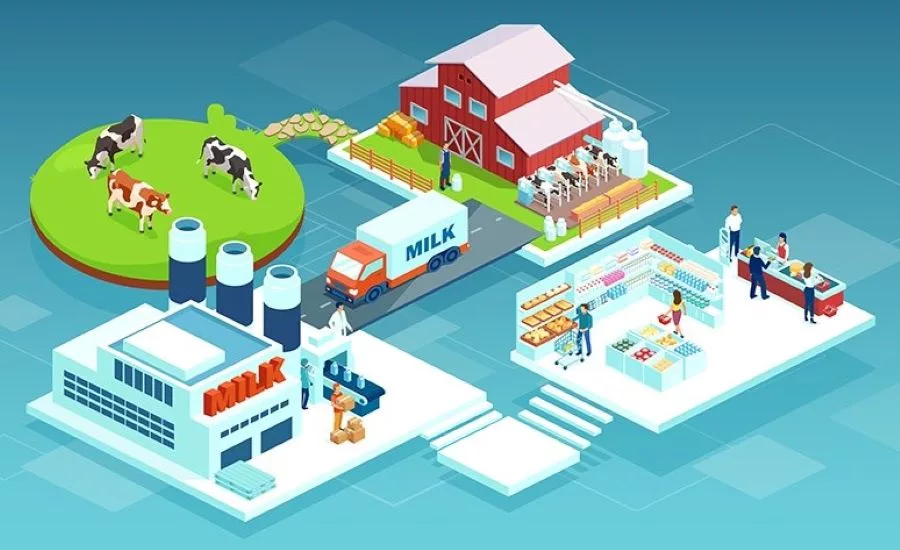
Introduction
Whey protein is often discussed through numbers: protein percentage, serving size, amino acids, calories, and price. Those numbers matter, but they do not tell the whole story. A whey protein product is only as trustworthy as the system behind it: where the whey came from, how it was handled, how it was processed, and whether the final product was tested against clear quality expectations.
In food systems, traceability refers to the ability to determine the history or location of a product or its relevant components. ISO 22005 describes traceability as a technical tool that can help food businesses identify the history or location of a product and design systems appropriate to their objectives. (ISO, 2007)
For whey protein, traceability should not be treated as a marketing phrase. It should be understood as a practical quality principle. It connects the dairy source, the processing pathway, batch documentation, laboratory testing, labelling, and consumer trust.
1. Source: quality begins before processing
Whey is not an artificial ingredient created in isolation. Codex defines whey as the fluid milk product obtained during the manufacture of cheese, casein, or similar products after separation from the curd following milk coagulation. Sweet whey is typically associated with rennet-type coagulation, while acid whey results principally from acidification. (Codex Alimentarius Commission, 1995/2003/2010)
This distinction matters because the source and type of whey influence downstream processing. A responsible whey protein pathway should therefore begin with basic source-level questions:
- Which dairy or cheese processor produced the whey?
- Is the whey sweet whey or acid whey?
- How quickly was it collected after cheese production?
- Was it handled hygienically before processing?
- Was temperature controlled during storage and transport?
- Is there documentation linking the whey stream to the processor and collection date?
These questions are especially important in Pakistan, where whey valorisation is still developing. GAIN Pakistan reported that a survey of 68 cheese-processing units in Punjab found substantial whey generation and estimated that 257 million litres of liquid whey are wasted annually, with 91.18% of surveyed cheese-producing units directly discharging whey into open fields or drains. (GAIN Pakistan, 2025)
That context shows why traceability is not only a consumer-quality issue. It is also a dairy-sector development issue. If whey is to move from being treated as waste to becoming a value-added nutrition ingredient, the first requirement is knowing where it came from and whether it is suitable for controlled processing.
2. Process: transparency should follow the whey through each step
Whey protein concentrate is produced by removing sufficient non-protein constituents from whey so that the finished dry product contains at least 25% protein; industry standards describe physical separation techniques such as membrane filtration as one route for producing WPC. (ADPI, 2023)
In practical terms, a whey protein process may include clarification, fat separation, membrane filtration, concentration, drying, blending, packaging, and storage. Each stage can affect consistency, composition, hygiene, and final product quality.
This is why “process transparency” should mean more than showing an attractive factory image. It should mean that a company can explain the logic of its process:
- how raw whey is screened;
- how solids, fat, and other non-target components are managed;
- how the protein-rich fraction is concentrated;
- how drying is controlled;
- how batches are identified;
- how finished product is stored and protected from contamination or moisture uptake.
Good Hygiene Practices are the foundation of food hygiene systems, and FAO explains that food businesses need to understand and manage chemical, biological, and physical hazards that may enter food at different points in the food chain. (FAO, 2023)
For whey protein, this means quality cannot be inspected into the product only at the end. It must be built through source control, hygienic handling, controlled processing, batch documentation, and finished-product verification.
3. Testing: labels should be supported by evidence
Testing is the point where quality claims should become measurable. A whey protein label may state protein content, serving size, ingredients, allergens, and nutritional values, but those claims require analytical support.
Codex’s whey powder standard includes compositional and quality factors such as protein, fat, water, ash, pH or acidity, and compliance with relevant contaminant and hygiene provisions. It also states that whey powders should be prepared and handled according to appropriate Codex hygiene texts and should comply with microbiological criteria established for foods. (Codex Alimentarius Commission, 1995/2003/2010)
For WPC80 specifically, industry specifications commonly include compositional indicators such as protein, lactose, fat, moisture, ash, pH, sensory characteristics, and microbiological limits. ADPI’s WPC80 standard, for example, lists typical protein values of 80.0–82.0% with a 79.5% minimum on a dry basis, alongside limits for moisture, fat, microbiological counts, and pathogens. (ADPI, 2023)
A credible testing approach for whey protein should therefore consider:
- protein content;
- moisture;
- fat;
- lactose;
- ash/minerals;
- pH/acidity;
- microbiological quality;
- contaminants where relevant;
- batch-to-batch consistency;
- label accuracy.
Testing also protects responsible businesses. It allows a company to identify deviations, correct process issues, and avoid relying on assumptions. For consumers, testing provides reassurance that the product is not only described well but also verified.
4. Why traceability matters for Pakistan’s whey future
Pakistan’s whey opportunity is larger than the supplement market. GAIN’s Whey2Value initiative frames whey valorisation around reducing environmental strain from dairy processors, supporting responsible economic growth and job creation in the dairy value chain, and improving consumption of nutritious whey-based products among vulnerable populations. (GAIN Pakistan, 2025)
Danida Business Partnerships describes Whey2Value as a project that aims to reduce environmental pollution from cheese-production waste streams by transforming whey-water into a safe, affordable, healthy drink for children, while also supporting green private-sector growth in the dairy sector. (Danida Business Partnerships, 2024)
This broader context is important. If whey is collected and processed without traceability, the value chain remains fragile. If source, process, and testing are documented, whey can become part of a more credible local nutrition system.
Traceability can help build trust between:
- dairy processors supplying whey;
- manufacturers converting whey into value-added ingredients;
- laboratories verifying quality;
- distributors and retailers handling finished products;
- consumers relying on accurate labels;
- development-sector partners interested in sustainable dairy systems.
In this sense, traceability is not paperwork for its own sake. It is the architecture of accountability.
5. Nutribolix’s approach to traceability
Nutribolix is being developed with the view that trust should be built before a product reaches the consumer. For whey protein, that means asking questions early: where the whey comes from, how it is handled, how it is processed, what testing is performed, and how the final product is represented.
Our quality philosophy is being developed around three linked principles.
First, source visibility: understanding the dairy origin of the whey stream and building relationships with suppliers who value responsible handling.
Second, process transparency: communicating the logic of the process rather than relying only on finished-product marketing.
Third, testing and documentation: developing a framework in which composition, safety, batch consistency, and label accuracy can be supported by evidence.
This approach is still being built, but the direction is clear. Nutribolix aims to contribute to a more transparent protein future in Pakistan: one in which whey protein is not only local, but also traceable, tested, and responsibly communicated.
Conclusion
Traceability in whey protein is about more than knowing the name on the tub. It is about knowing the source, understanding the process, and verifying the product.
A trustworthy whey protein value chain should be able to answer three questions:
- Source: Where did the whey come from?
- Process: How was it handled and transformed?
- Testing: What evidence supports the final product claims?
For Pakistan, these questions are especially important. Whey valorisation can reduce waste, create value for the dairy sector, and support safer, better-quality nutrition products. But that opportunity depends on disciplined sourcing, transparent processing, and credible testing.
At Nutribolix, this is the standard we are working toward.
Sources:
- Codex Alimentarius Commission. Standard for Whey Powders, CODEX STAN 289-1995.
- ISO. ISO 22005:2007 — Traceability in the feed and food chain.
- FAO. Good Hygiene Practices and HACCP Toolbox for Food Safety.
- ADPI. Whey Protein Concentrate Standard, v4.0, effective 2023.
- GAIN Pakistan. A new “Whey” to boost Pakistan’s dairy industry.
- Danida Business Partnerships. Whey2Value – Greening the dairy sector.